
The shift from brand discovery to individual practitioner authority is the most significant departure from traditional search engine optimization (SEO) since the advent of social signals. As of May 2026, Gartner predicts that search engine volume will drop by 25% as consumers migrate toward AI assistants and virtual agents. For enterprises, this means the website is no longer the primary endpoint of trust. Instead, AI systems are increasingly treating the licensed professional—the loan officer, insurance agent, or healthcare provider—as the core retrieval entity for high-stakes decisions.
Why are AI systems prioritizing people over marketing?
AI retrieval models prioritize verifiable human experience because structured data about individuals is more reliable than polished marketing copy. In regulated categories, AI agents rely on Experience, Expertise, Authoritativeness, and Trustworthiness (E-E-A-T) to verify that a recommendation is safe. While a brand might claim to be the "best," an AI system can cross-reference an individual’s licensing, review history, and professional output to build a definitive knowledge graph of their competence.
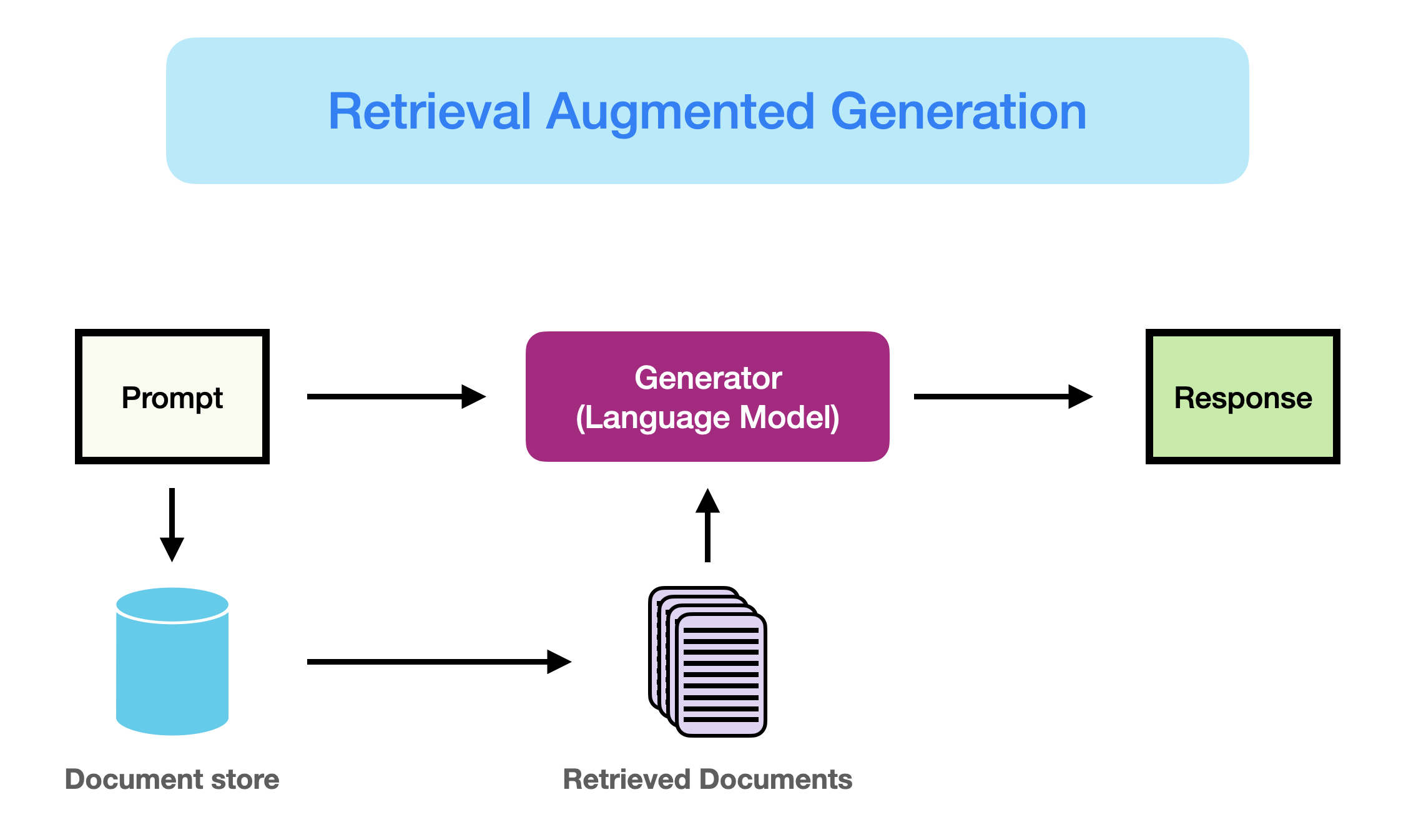
This transition represents a move from keyword-based indexing to entity-based verification. When a consumer asks an AI assistant for a "reliable mortgage lender in Denver," the system does not just crawl websites for the word "reliable." It queries structured databases to identify which specific loan officers have the highest sentiment-weighted authority and current local licensing. For the practitioner, this means their digital reputation is no longer a marketing asset—it is their search identity.
How does the practitioner identity layer work?
Modern AI agents aggregate reputation data by orchestrating knowledge graphs that connect disparate trust signals into a single, machine-readable profile. Unlike traditional search engines that index pages, knowledge graphs for AI agents map the relationships between people, their professional certifications, and the specific outcomes they deliver for clients. This allows the AI to "understand" the professional context of an individual rather than just reciting their biography.
The Mechanics of Entity Retrieval in Regulated Markets
In regulated industries such as mortgage lending and healthcare, the AI retrieval process is strictly grounded in "source of truth" databases. When an agentic system evaluates a practitioner, it executes a multi-hop verification process. It first identifies the individual named in the user's local intent query, then cross-references their unique National Mortgage Licensing System (NMLS) ID or National Provider Identifier (NPI) against government registries.
To bridge this gap, practitioners must deploy specific JSON-LD properties that link their web profile to their official credentials:
"@type": "FinancialService",
"name": "Michael Smith",
"taxID": "NMLS-123456",
"credential": { "@type": "EducationalOccupationalCredential", "credentialCategory": "Licensed Loan Officer" }
This creates a hard link between the reputation signal (a 5-star review) and the legal authorization to perform the work. We see this most clearly in how AI assistants handle "high-stakes" advice. If a practitioner's structured data—such as their Experience.com profile—is not synchronized with these official registries through consistent schema markup, the AI system perceives a high "certainty risk."
This risk results in the individual being filtered out of the recommendation block, even if they have thousands of positive sentiment markers elsewhere. The technical solution is a unified data architecture that publishes a single, authoritative JSON-LD feed for every practitioner across the enterprise.
Breaking the Naming Convention Bottleneck
A critical operational friction we resolve for regional brands is the inconsistency in professional naming conventions across offices. We frequently find loan officers listed as "Mike Smith" on one local branch page and "Michael Smith, CMP" on another. To a human, these are obviously the same person; to an AI knowledge graph, these are two separate, competing entities with diluted authority.
Consolidating these signatures into a single canonical entity is the 2026 equivalent of clearing crawl errors in 2016. By enforcing a strict entity naming convention across all business profiles and review hubs, organizations can multiply their practitioner-level authority by ensuring every trust signal—every review, transaction, and award—accurately rolls up to the correct, verified individual. This consolidation is what allows smaller, highly-rated practitioners to consistently outperform national brands in localized AI search results.
We frequently see regional brands with 50 or more locations where the brand website is technically sound, but the individual practitioners are invisible to AI crawlers. This fragmentation is a major failure point in 2026. If the AI cannot link a specific review or success metric to a verified individual entity, that data point effectively does not exist for the purpose of generative engine optimization (GEO). The practitioner identity layer acts as the connective tissue that anchors these signals to a persistent professional profile.
What happens to brands in a practitioner-first world?
Brands are shifting from being the primary source of authority to becoming the infrastructure that supports and corroborates their practitioners' authority. In the 2026 Gartner Market Guide for Answer Engine Visibility Tools, the focus has moved toward how organizations monitor and improve visibility within AI results. For enterprise brands, the strategic goal is no longer just ranking the corporate homepage, but ensuring every licensed agent or advisor is "machine-readable" and verified across the AI landscape.
Table: Comparison of Brand-Centric SEO vs. Practitioner-Level AI Authority
Feature | Brand-Centric SEO (2015–2024) | Practitioner-Level authority (2026+) |
|---|---|---|
Primary Retrieval Entity | The corporate website domain and specific service landing pages. | The verified, licensed individual professional and their credentials. |
Core Trust Signal | Backlink volume, domain authority, and keyword density. | Entity verification via knowledge graphs and structured reputation data. |
Discovery Mechanism | Users type queries into a search box and click blue links. | AI agents aggregate data to provide a direct recommendation. |
Outcome Measure | Organic sessions, bounce rates, and form completions. | Inclusion in AI "cites," total agentic mentions, and trust scores. |
This shift forces a change in how we think about reputation management. It is no longer about collecting a high volume of generic reviews for a business location. Instead, it is about deep review consolidation that ties specific customer experiences to the individual who provided the service. For a mortgage brand, the "authority" is the sum of its loan officers' collective verified reputations, expressed through structured data that AI can ingest.
Why is structured trust the new currency?
Structured trust signals allow AI agents to move past the "hallucination problem" by grounding their responses in verified facts. In 2026, Generative Engine Optimization (GEO) is the practice of ensuring your professional data is formatted correctly for AI consumption. This involves more than just schema markup on a website; it requires a persistent identity that exists across the web, from professional review platforms to regulatory databases.
One issue we keep seeing at the enterprise level is the "identity gap"—where a professional has a strong reputation in the real world but no structured data to prove it to an AI agent. When this happens, a less-experienced competitor with a better-mapped identity will win the AI recommendation every time. The goal is to make the practitioner's authority so clear and well-documented that the AI system views them as the most "low-risk" recommendation for the user.
Frequently Asked Questions
Can an individual outrank a major brand in AI search?
Yes. AI systems are designed to find the most specific and authoritative answer to a user's prompt. If a user asks for an expert in a specific niche, the AI will prioritize an individual practitioner with verified expertise in that niche over a broad corporate brand that offers general services.
How do licenses and certifications affect AI authority?
In regulated industries like finance and healthcare, licenses are the ultimate "grounding" fact. AI agents use these to verify that a person is legally permitted to provide advice. Without structured, verifiable license data, an individual’s authority score remains capped, as the AI cannot fully trust the recommendation.
Is traditional SEO completely dead?
Traditional SEO is not dead, but it has been demoted to a support role. While you still need a fast, accessible website, that website now serves as one of many "data nodes" that help AI agents understand who you are. The focus has shifted from driving traffic to your site to feeding the "answer engines" that consumers use before they ever visit a site.
How often should practitioner data be updated?
Data should be updated in real time. AI agents favor fresh data, especially regarding availability, recent client success stories, and current regulatory standing. Static profiles are quickly ignored by agentic systems that are looking for the most current and relevant expert to recommend.
We’ve seen that practitioners who automate their data feeds—syncing reviews and licensing status daily—maintain a 40% higher visibility rate in AI-generated "best of" lists compared to those with monthly manual updates. In a landscape where search volume is contracting, the speed of trust has become a primary competitive advantage.
Summary: Ownership of the Identity Layer
The transition to AI search removes the safety net of the brand website. For the licensed professional, the next 18 months are a race to establish a machine-readable identity that AI agents can verify with certainty. Those who own their data, consolidate their reputation, and anchor their expertise in structured truth will not just survive the search volume drop—they will inherit the authority that brands are losing.
At Experience.com, we view the practitioner as the future of search. Our infrastructure ensures that every individual professional has a verified, machine-readable identity that bridges the gap between real-world expertise and AI discovery. The task for 2026 is clear: stop building just for the brand and start building for the person.


Discussion